
StartUp Ecosystem
The Italian Startup Ecosystem: Building a New Renaissance
From the legacy of the Renaissance to today’s startups: connecting territories, talent and diverse visions to build the future of Italian innovation.
Italy’s startup ecosystem does not grow from a single city, industry or model of entrepreneurship. Its strength comes from the connection between different territories, skills, cultures and ways of imagining the future.
From the collaborative workshops of the Renaissance to today’s startup incubators, Italy has repeatedly transformed creativity, technical knowledge and entrepreneurial courage into tangible innovation.
The challenge today is to connect this legacy with technology, research, capital and international markets, creating a new future for Made in Italy innovation.
What the Renaissance Can Teach Today’s Startups
The Renaissance was not shaped by isolated geniuses alone.
It was an innovation ecosystem in which artists, craftspeople, scholars, merchants, investors and public institutions exchanged knowledge and worked together. Ideas moved between cities, developed through experimentation and became artworks, technologies and enterprises.
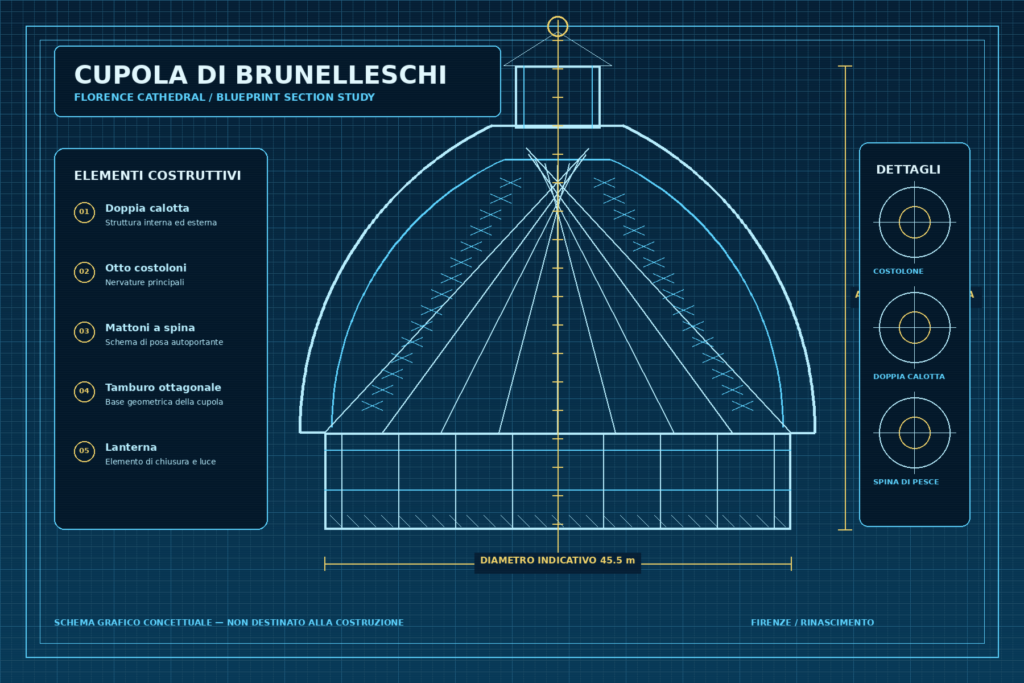
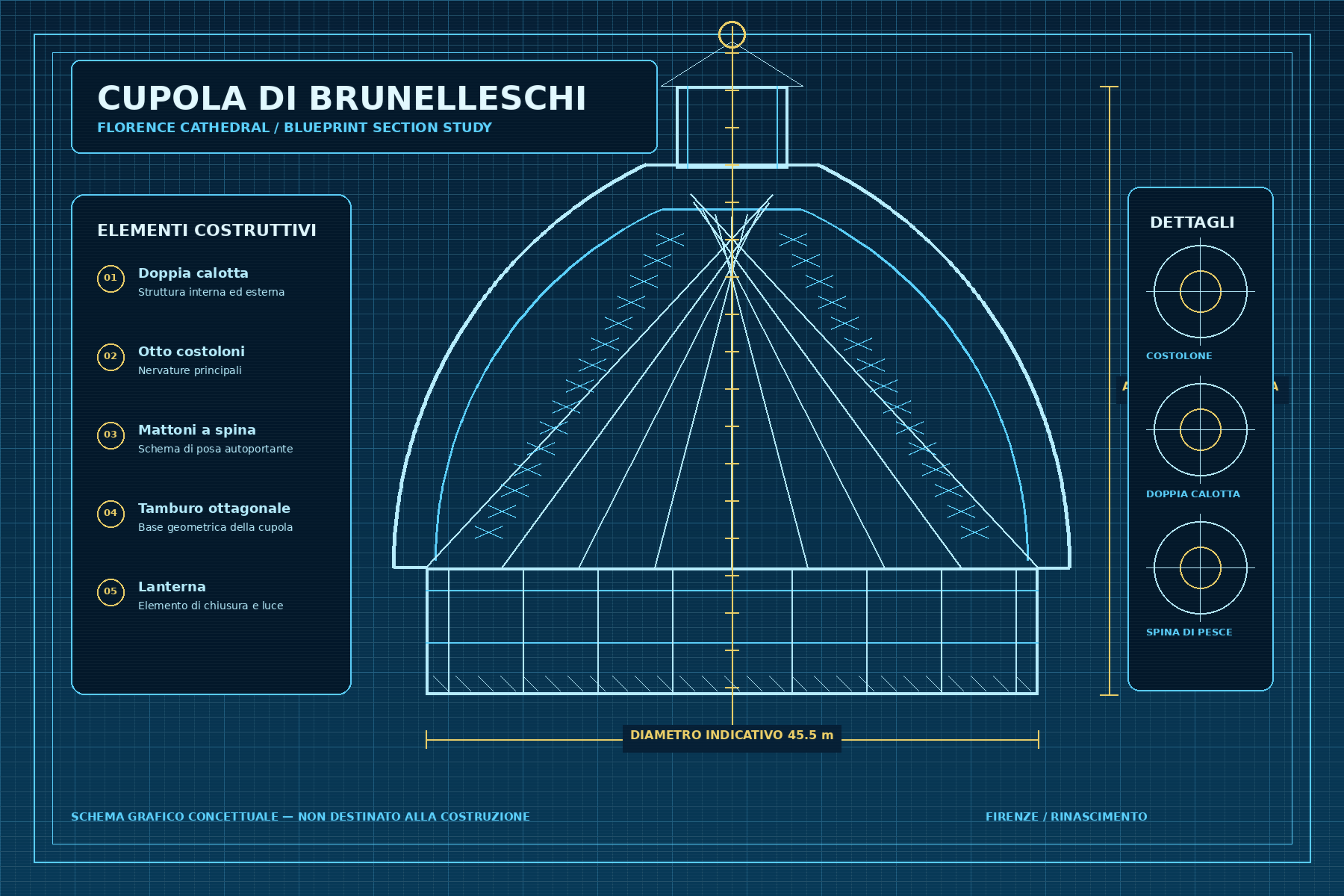
Brunelleschi’s dome is one of the clearest examples of this approach. Its construction required vision, engineering expertise, practical experimentation and the ability to coordinate different skills around an ambitious objective.
The same principle applies to startups today.
A powerful idea is not enough. Innovation requires a method, a strong team, access to knowledge, financial resources and an ecosystem capable of supporting growth.
Talent creates greater value when it becomes part of a connected network.
Daring Requires Method, Not Improvisation
Innovation begins with the courage to imagine something that does not yet exist.
However, daring does not mean acting without direction. Successful entrepreneurs combine ambition with analysis, experimentation and execution.
They test their assumptions, listen to the market and improve their solutions through continuous learning. They understand that uncertainty cannot be eliminated, but it can be managed through a clear process.
This is one of the most important roles of a business incubator: helping founders transform intuition into a validated project and a promising idea into a sustainable company.
Incubation provides startups with the tools, expertise and relationships they need to make better decisions, reduce risks and accelerate their path to market.
Italy’s Regional Innovation Ecosystems
There is no single Italian model of innovation.
Every territory contributes its own history, skills and entrepreneurial culture. These differences should not be considered a weakness. They are one of the greatest strengths of the Italian startup ecosystem.
Naples expresses creativity, adaptability and the ability to develop new solutions in complex environments.
Turin combines engineering expertise, industrial knowledge and a strong culture of execution.
Bologna brings together universities, research, cooperation and networks of specialised companies.
Taranto represents the potential of innovation as a tool for industrial, environmental and social regeneration.
Other Italian cities and regions contribute additional expertise in design, manufacturing, food, fashion, mobility, aerospace, life sciences, energy and digital technologies.
The future of Italian innovation depends on our ability to connect these local ecosystems, allowing knowledge, talent and opportunities to move beyond regional boundaries.
From Local Talent to a National Startup Network
Italian startups often emerge from highly specialised local communities.
Their long-term growth, however, depends on their ability to build relationships at national and international levels.
A founder may develop an idea in one region, find technical expertise in another, work with a corporate partner in a third and enter international markets through a global network.
For this reason, the Italian startup ecosystem must become more connected.
Universities, companies, investors, public institutions and incubators need to collaborate more closely. Resources and expertise must be easier to access, while successful models should be shared between territories.
The objective is not to make every innovation hub identical.
It is to create a national network in which different territories can preserve their identity while contributing to a shared vision.
The Role of Business Incubators
Business incubators act as bridges between ideas and markets.
They support entrepreneurs during the most delicate stages of company development, helping them validate their business models, define their positioning, build partnerships and prepare for investment.
An effective incubator does more than provide office space or occasional advice.
It creates connections between startups, established companies, investors, institutions, universities and international partners. It helps founders understand market needs and turn technological or creative potential into measurable value.
For corporations, incubators can become strategic partners for open innovation, scouting and collaboration with emerging companies.
For investors, they provide access to selected projects and a structured process for assessing their development.
For public institutions, incubators can support entrepreneurship, employment and territorial regeneration.
Their value lies in their ability to connect different actors around common objectives.
Made in Italy Innovation for Global Markets
Made in Italy is traditionally associated with quality, design, craftsmanship and cultural identity.
Today, these values can also become the foundation of a new generation of technology-driven companies.
Italian startups can combine creativity with artificial intelligence, manufacturing with automation, traditional industries with digital platforms and local expertise with global distribution.
The objective is not simply to preserve Italy’s heritage.
It is to reinterpret that heritage and use it to create new products, services and business models.
This is how Made in Italy innovation can remain relevant in increasingly competitive international markets.
Building the Next Italian Renaissance
The next Italian Renaissance will not be created by one person, one startup or one city.
It will emerge from collaboration between territories, generations and disciplines.
It will require founders who are willing to take risks, companies that are open to change, investors with a long-term perspective and institutions capable of creating favourable conditions for innovation.
It will also require stronger connections between local talent and global opportunities.
At PlugIN Business Incubator, we connect Italian startups with companies, investors, institutions and international markets.
We help founders transform promising ideas into validated projects, strategic partnerships and scalable businesses. We work to create an innovation ecosystem in which diverse talents, territories and visions can contribute to a shared future.
Because innovation does not mean abandoning our identity.
It means using our history, skills and creativity to build what comes next.
Are you developing a startup, an open innovation project or a territorial innovation programme? Start a conversation with PlugIN and become part of the new Italian Renaissance.
@killermedia
-
L’ecosistema italiano delle startup: costruire un nuovo Rinascimento
Sottotitolo: Dall’eredità del Rinascimento alle startup contemporanee: collegare territori, talenti e visioni differenti per costruire il futuro dell’innovazione italiana. L’articolo sostiene che la forza dell’ecosistema italiano delle startup non dipenda da una…
-
StartUp Ecosystem
From the legacy of the Renaissance to today’s startups: diverse regions, talents, and visions coming together to build a new future for Italian innovation.
